RateBuddyCredit card guide

Best Small Business Credit Cards in Canada

  • Fact checked
  • Business spending
  • Rewards & expense tools

Business cards should make spending easier to manage

The right business credit card can help separate personal and business expenses, earn rewards on operating costs, and simplify records. RateBuddy helps compare rewards, fees, employee card options, expense tools, insurance, and welcome offers in one friendly place.

Useful details for owners
  • Business reward categories
  • Employee cards and controls
  • Expense management features
  • Fees, rates and welcome offers

RateBuddyOFFERS AT A GLANCE

Featured Credit Card Offers of October 2026

  • Get Ratebuddy Cash Rebate $200 RateBuddy rebate

    Earn up to $950 in welcome offers, first-year rewards and savings value, including up to 50,000 bonus Scene+ points.

    Welcome bonus (up to)
    $950
    RateBuddy rebate
    $200

    Get from RateBuddy$200

    Rebate ends

  • Get Ratebuddy Cash Rebate $200 RateBuddy rebate

    Earn up to $3,000 in value in the first 14 months, including up to 100,000 bonus Scene+ points.*

    Welcome bonus (up to)
    $3,000
    RateBuddy rebate
    $200

    Get from RateBuddy$200

    Rebate ends
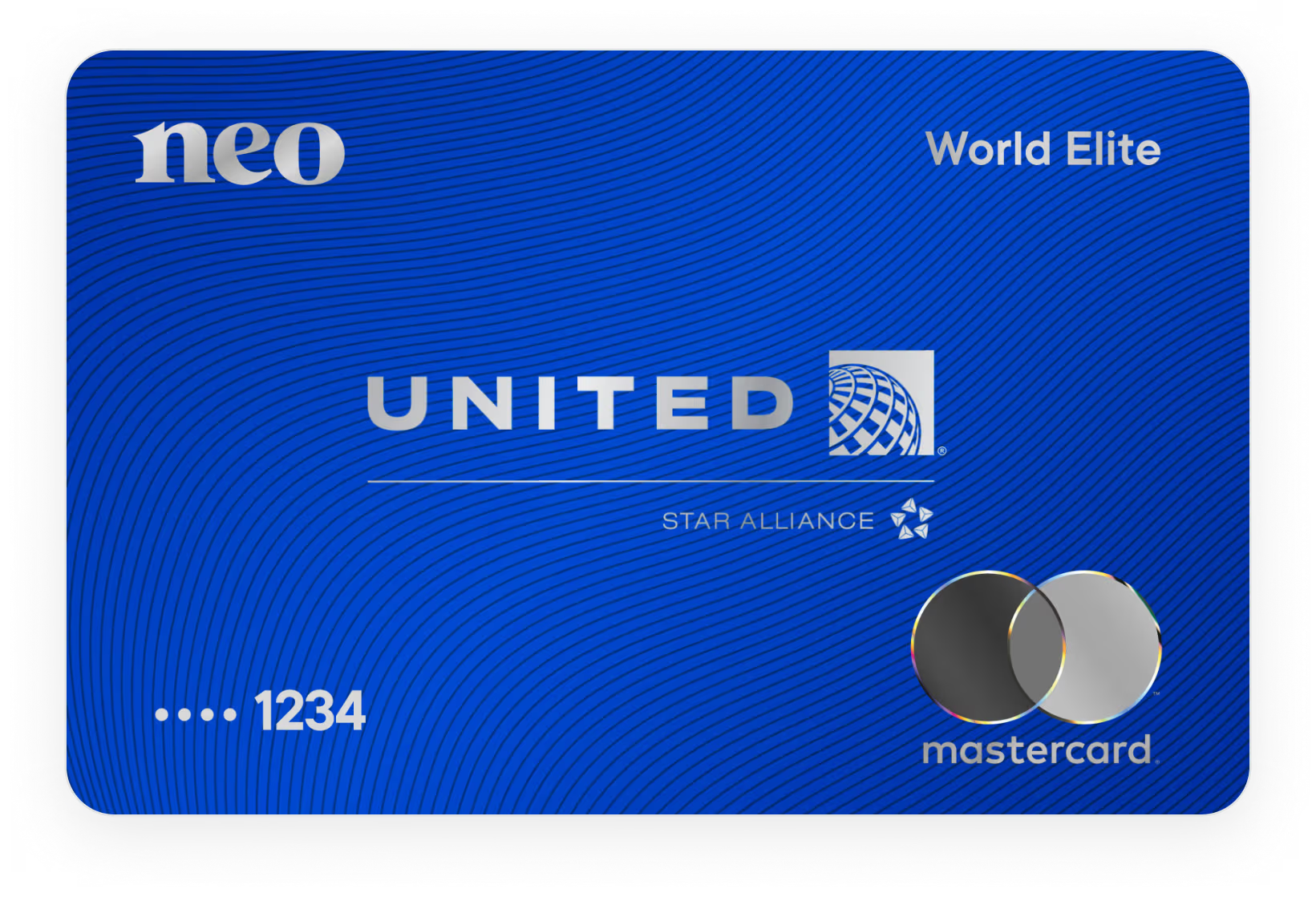
  • Get Ratebuddy Cash Rebate $75 RateBuddy rebate

    Earn up to 25,000 MileagePlus miles (5,000 miles on card activation and first transaction and 15,000 miles when you spend $3,000 net of refunds within 3 months of application)

    Welcome bonus (up to)
    $375
    RateBuddy rebate
    $75

    Get from RateBuddy$75

    Rebate ends

  • Get Exclusive Ratebuddy Cash Rebate $100 RateBuddy rebate
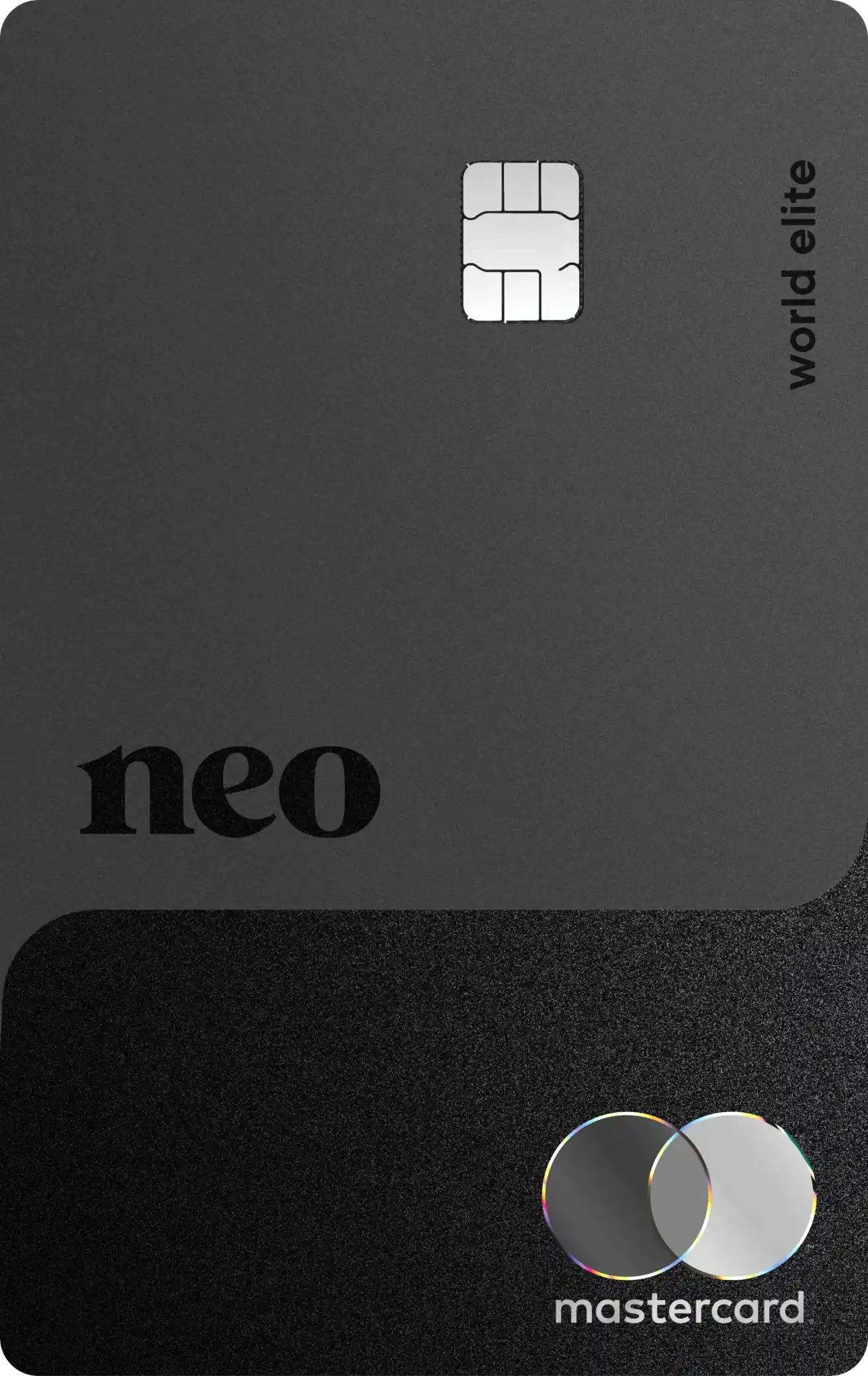
    Neo World Elite Mastercard credit card
    Neo Financial

    Neo World Elite Mastercard

    Featured

    Get Neo’s $100 welcome bonus + Get Exclusive RateBuddy cash rebate $100! Conditions apply.

    Welcome bonus (up to)
    $100
    RateBuddy rebate
    $100
  • Ratebuddy Cash Rebate $75 RateBuddy rebate
    Neo World Mastercard credit card
    Neo Financial

    Neo World Mastercard

    Featured

    Best no annual-fee cashback card in Canada*

    Details

    The Neo World Mastercard® is designed to elevate your everyday spending with the best no annual-fee cashback card in Canada*. The Neo World Mastercard gives you three no-annual-fee cashback choices: Everywhere, Gas & Grocery, or Shop & Dine. Each version is designed around a different spending style, with up to 15% boosted cashback on top of base cashback rates at participating Neo partners.

  • Get up to $2,600 in first-year value, including up to 40,000 bonus Scene+ points. Conditions apply.

    Earn up to 40,000 bonus Scene+ points with qualifying spending, included in up to $2,600 in advertised first-year savings and reward value. Conditions apply. Welcome offer ends

Smart Card Filter Auto-updates results

Compare The Best Small Business Cards — October 2026

Last updated

Use the filters to shape the card results below. Adjust your monthly spend, narrow by provider, or highlight no-fee and welcome-bonus options — RateBuddy will quietly refresh the list so the results stay connected to your choices.

Ready to refine
$
Get up to $2,600 in first-year value, including up to 40,000 bonus Scene+ points. Conditions apply.
Annual fee $199
Purchase APR 20.99%
Cash advance 22.99%
Scotiabank®
Best for Travel Rewards Business Premium
Scotiabank Passport® Visa Infinite Business* Card
Best for Travel Rewards Business Premium
Rewards program Scene+
Earn up to 40,000 bonus Scene+ points with qualifying spending, included in up to $2,600 in advertised first-year savings and reward value. Conditions apply. Open an eligible new account from May 1 to October 31, 2026. Earn 30,000 bonus Scene+ points after $5,000 in eligible purchases posts within three months, plus 10,000 after $60,000 posts within 12 months. Bonuses generally arrive within approximately eight weeks after qualification; the account must remain open and in good standing. Current Scotiabank business cardholders and those who held a primary or secondary business card within the previous two years are excluded. Terms and conditions apply. Expires Oct 31, 2026

Card essentials

Rates, fees and requirements

The important numbers, organized so they are easy to scan and compare.

Purchase APR 20.99% Regular purchase rate
Cash advance APR 22.99% Cash transaction rate
Balance transfer APR 22.99% When available
Foreign transaction fee 0% Foreign-currency purchases
Additional card fee $50 Supplementary cardholder

Before you apply

Eligibility snapshot

Recommended credit score —
Minimum personal income $60,000
Minimum household income $100,000

Approval, rates and credit limits are determined by the card provider.

Annual fee $149$0 First year waived
Purchase APR 14.99%
Cash advance 22.99%
TD Canada Trust
Best for Travel Rewards Business Rewards
TD Aeroplan Visa Business Card
Best for Travel Rewards Business Rewards
Rewards program Aeroplan
First year free
Earn up to 60,000 Aeroplan points + First-year fee waived for you and 2 employees. Earn up to $1,900 in value. 10,000 pts on first purchase; 30,000 pts after spending $15k in 180 days; 20,000 pts after spending $25k in 365 days. Plus, a first-year annual fee rebate for the Primary Business Cardholder and first two Additional Cardholders.

Card essentials

Rates, fees and requirements

The important numbers, organized so they are easy to scan and compare.

Purchase APR 14.99% Regular purchase rate
Cash advance APR 22.99% Cash transaction rate
Balance transfer APR — When available
Foreign transaction fee — Foreign-currency purchases
Additional card fee $49 Supplementary cardholder

Before you apply

Eligibility snapshot

Recommended credit score —
Minimum personal income —
Minimum household income —

Approval, rates and credit limits are determined by the card provider.

Annual fee $149$0 First year waived
Purchase APR 19.99%
Cash advance 22.99%
TD Canada Trust
Best for Travel Rewards Business Rewards
TD Business Travel Visa Card
Best for Travel Rewards Business Rewards
Rewards program TD Rewards
First year free
Earn up to 200,000 TD Rewards Points + First-year fee waived for you and 4 employees. Earn up to $1,300 in value. 30,000 pts on first purchase; 120,000 pts after spending $15k in 180 days; 30,000 pts after spending $25k in 365 days; 20,000 pts on your 15-month anniversary. Plus, a first-year annual fee rebate for the Primary Cardholder and first four Additional Cardholders.

Card essentials

Rates, fees and requirements

The important numbers, organized so they are easy to scan and compare.

Purchase APR 19.99% Regular purchase rate
Cash advance APR 22.99% Cash transaction rate
Balance transfer APR — When available
Foreign transaction fee — Foreign-currency purchases
Additional card fee $49 Supplementary cardholder

Before you apply

Eligibility snapshot

Recommended credit score —
Minimum personal income —
Minimum household income —

Approval, rates and credit limits are determined by the card provider.

Annual fee $599
Purchase APR 21.99%
Cash advance 21.99%
American Express(Canada)
Best for Travel Rewards Business Premium
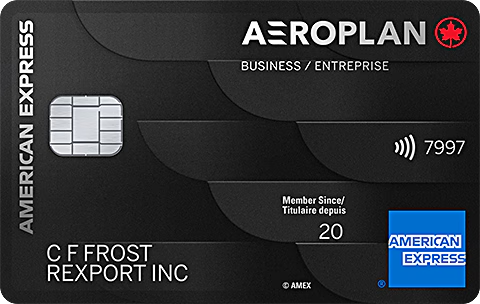
American Express Aeroplan Business Reserve Card
Best for Travel Rewards Business Premium
Rewards program Aeroplan
Up to 90,000 Welcome Bonus Aeroplan points Includes Annual Worldwide Companion Pass and 1,000 Status Qualifying Credits.

Card essentials

Rates, fees and requirements

The important numbers, organized so they are easy to scan and compare.

Purchase APR 21.99% Regular purchase rate
Cash advance APR 21.99% Cash transaction rate
Balance transfer APR — When available
Foreign transaction fee — Foreign-currency purchases
Additional card fee $199 Supplementary cardholder

Before you apply

Eligibility snapshot

Recommended credit score —
Minimum personal income —
Minimum household income —

Approval, rates and credit limits are determined by the card provider.

Annual fee $120
Purchase APR 19.99%
Cash advance 22.99%
CIBC
Best for Travel Rewards Business Premium
CIBC Aeroplan Visa Business Plus Card
Best for Travel Rewards Business Premium
Rewards program Aeroplan
Up to 75,000 Aeroplan points + Annual Fee Rebate for the first 2 years. 10,000 pts on first purchase; 25,000 pts after $7,500 spend in 3 months; 40,000 pts after $40,000 spend in 12 months. Fee rebate for primary and 3 authorized users.

Card essentials

Rates, fees and requirements

The important numbers, organized so they are easy to scan and compare.

Purchase APR 19.99% Regular purchase rate
Cash advance APR 22.99% Cash transaction rate
Balance transfer APR — When available
Foreign transaction fee — Foreign-currency purchases
Additional card fee — Supplementary cardholder

Before you apply

Eligibility snapshot

Recommended credit score —
Minimum personal income —
Minimum household income —

Approval, rates and credit limits are determined by the card provider.

Annual fee $180
Purchase APR 12.99%
Cash advance 14.50%
CIBC
Best for Travel Rewards Business
CIBC Aeroplan Visa Business Card
Best for Travel Rewards Business
Rewards program Aeroplan
Up to 75,000 Aeroplan points + Annual Fee Rebate for the first 2 years. 10,000 pts on first purchase; 25,000 pts after $7,500 spend in 3 months; 40,000 pts after $40,000 spend in 12 months. Fee rebate covers primary and 3 authorized users for 2 years.

Card essentials

Rates, fees and requirements

The important numbers, organized so they are easy to scan and compare.

Purchase APR 12.99% Regular purchase rate
Cash advance APR 14.50% Cash transaction rate
Balance transfer APR — When available
Foreign transaction fee — Foreign-currency purchases
Additional card fee — Supplementary cardholder

Before you apply

Eligibility snapshot

Recommended credit score —
Minimum personal income $35,000
Minimum household income —

Approval, rates and credit limits are determined by the card provider.

Annual fee $120$0 First year waived
Purchase APR 19.99%
Cash advance 21.99%
CIBC
Best for Travel Rewards Business
CIBC Aventura Visa Card for Business
Best for Travel Rewards Business
Rewards program Aventura
First year free
Up to 70,000 Aventura Points + Annual Fee Rebate for the first 2 years. 20,000 points on first purchase; 50,000 points after spending $40,000 in first 12 months. Fee rebate covers Primary and 3 Authorized users for 2 years.

Card essentials

Rates, fees and requirements

The important numbers, organized so they are easy to scan and compare.

Purchase APR 19.99% Regular purchase rate
Cash advance APR 21.99% Cash transaction rate
Balance transfer APR — When available
Foreign transaction fee — Foreign-currency purchases
Additional card fee — Supplementary cardholder

Before you apply

Eligibility snapshot

Recommended credit score —
Minimum personal income $35,000
Minimum household income —

Approval, rates and credit limits are determined by the card provider.

Annual fee $120$0 First year waived
Purchase APR 19.99%
Cash advance 22.99%
CIBC
Best for Travel Rewards Business Premium
CIBC Aventura Visa Card for Business Plus
Best for Travel Rewards Business Premium
Rewards program Aventura
First year free
Up to 70,000 Aventura Points + Annual Fee Rebate for the first 2 years. 20,000 points on first purchase; 50,000 points after spending $40,000 in first 12 months. Fee rebate covers Primary and 3 additional users for 2 years.

Card essentials

Rates, fees and requirements

The important numbers, organized so they are easy to scan and compare.

Purchase APR 19.99% Regular purchase rate
Cash advance APR 22.99% Cash transaction rate
Balance transfer APR — When available
Foreign transaction fee — Foreign-currency purchases
Additional card fee — Supplementary cardholder

Before you apply

Eligibility snapshot

Recommended credit score —
Minimum personal income $35,000
Minimum household income —

Approval, rates and credit limits are determined by the card provider.

Annual fee $150
Purchase APR 21.99%
Cash advance 21.99%
American Express(Canada)
Best for Travel Rewards Business Rewards
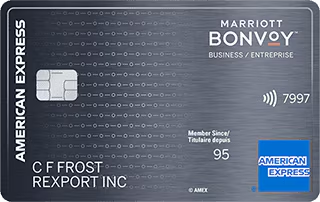
Marriott Bonvoy Business American Express Card
Best for Travel Rewards Business Rewards
Up to 80,000 Bonus Marriott Bonvoy points Earn 5X points on Marriott purchases. Includes an Annual Free Night Award and 15 Elite Night Credits.

Card essentials

Rates, fees and requirements

The important numbers, organized so they are easy to scan and compare.

Purchase APR 21.99% Regular purchase rate
Cash advance APR 21.99% Cash transaction rate
Balance transfer APR — When available
Foreign transaction fee — Foreign-currency purchases
Additional card fee $50 Supplementary cardholder

Before you apply

Eligibility snapshot

Recommended credit score —
Minimum personal income —
Minimum household income —

Approval, rates and credit limits are determined by the card provider.

Annual fee $125$0 First year waived
Purchase APR 20.99%
Cash advance 22.99%
National Bank of Canada
Best for Travel Rewards Business Rewards
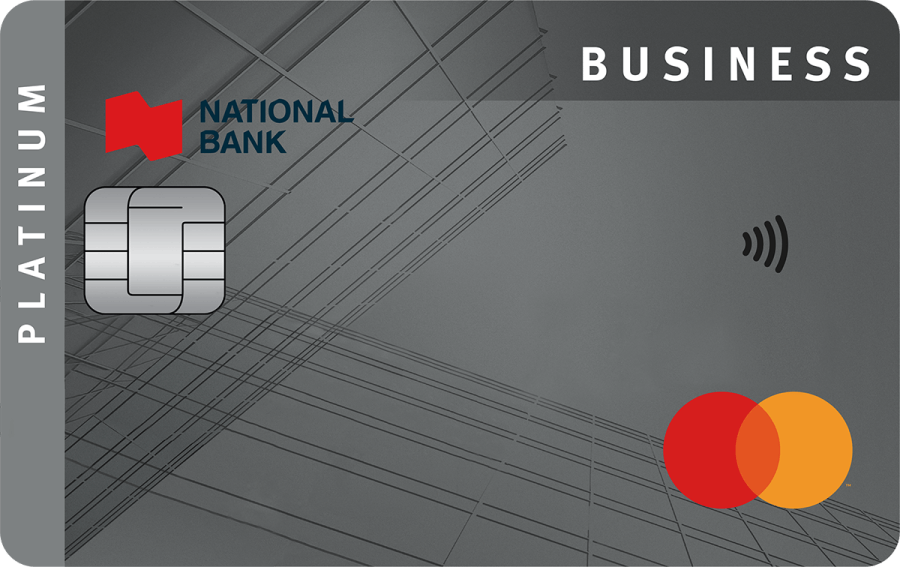
National Bank Platinum Business Mastercard
Best for Travel Rewards Business Rewards
Rewards program More Rewards
First year free
Up to 60,000 points and first-year annual fee rebate. 30k points after $5k spend (3mo); 30k points after $20k monthly spend (12mo). First-year fee waived for primary and first authorized user.

Card essentials

Rates, fees and requirements

The important numbers, organized so they are easy to scan and compare.

Purchase APR 20.99% Regular purchase rate
Cash advance APR 22.99% Cash transaction rate
Balance transfer APR — When available
Foreign transaction fee — Foreign-currency purchases
Additional card fee $50 Supplementary cardholder

Before you apply

Eligibility snapshot

Recommended credit score —
Minimum personal income —
Minimum household income —

Approval, rates and credit limits are determined by the card provider.

Showing 10 of 26 cards

Top Business Card Alternatives

Explore other highly-rated options you might have missed.

RateBuddy

Math. Not Marketing.

We calculate the true value to save you every penny.

Data-Driven Logic

Rankings based on hard numbers (fees vs rewards), not advertising budgets.

100% Unbiased

We highlight the "gotchas" and fees just as clearly as the perks.

Direct & Secure

No data harvesting. We send you straight to the bank's secure official site.

Power Your Business

Separate your finances, manage cash flow, and earn valuable rewards on your company’s overhead expenses.

Tax Season Simplified

One of the biggest headaches for small business owners is separating personal and business expenses. Keeping business costs on a dedicated card makes year-end reporting and tax filing effortless. Many cards integrate directly with accounting software like QuickBooks or Xero, automatically syncing transactions. This saves you hours of bookkeeping time and keeps your accountant happy. It is an organizational tool as much as a financial one.

Expanded Purchasing Power

Business cards typically offer significantly higher credit limits than personal cards. This gives you the flexibility to manage inventory costs, pay for advertising campaigns, and bridge unexpected cash flow gaps without maxing out your personal credit. This liquidity is vital for growth, allowing you to invest in opportunities immediately while waiting for client invoices to be paid. It acts as a short-term float for your operations.

Employee Expense Management

As your business grows, you can issue additional cards to your employees. This allows you to consolidate spending into one account while setting individual limits for each staff member. You can track exactly who is spending what, while earning rewards on their purchases for the company account. It empowers your team to make necessary purchases without needing to use personal funds and wait for reimbursement.

Match Me

Answer 3 simple questions. Our AI finds your perfect card instantly.

I'll Browse

Filter 120+ cards by bank, annual fee, rewards type, and more.

RATEBUDDY PRO TIP #HACK

Timing Your Welcome Bonus

Planning a big purchase (like a laptop or renovation)? Open a new card *before* you buy. That one large expense can instantly trigger a welcome bonus worth $300+.

Not sure what you need?

Explore other possibilities.

Credit Cards is great, but sometimes a different card fits your lifestyle better. Use our Smart Finder to see what else you qualify for.

Cash Back

Earn money on daily spend.

Travel Rewards

Best for frequent flyers.

RateBuddy.ca
Hello, Stranger.

Find Your Perfect Credit Card.

Your wallet deserves an upgrade.

LOYALTY PROGRAMS

Browse by Reward Program:

Already collect points? Find the card that accelerates your existing balance.

A little clarity, before you choose

Make the card fit your life.

Explore the bigger picture, check the numbers and find the tradeoffs that matter to you.

The Canadian picture

The Bank of Canada’s 2025 survey estimates that 89% of adults owned a credit card. Credit cards accounted for 48.2% of purchases recorded in its diary by number; 31% of cardholders reported not paying their full balance in the previous month.

Source: Bank of Canada · 2025 Methods-of-Payment Survey (published August 2026)

What this means for your comparisonOur interpretation: a card can be an everyday payment tool or an expensive way to borrow. The right comparison starts with how you repay, then considers rewards and benefits.

How do you choose a card that actually fits?Compare the Canadian market through your spending, borrowing costs and everyday needs.

A useful card comparison starts with a question about your life: will this card mainly help you pay, borrow, travel or build a payment history? Those jobs need different comparisons. A large welcome offer can be attractive, but it cannot tell you whether the card will still work for you a year from now.

Read the market in layers

Think of the Canadian card market as several overlapping choices. The issuer sets the account agreement. The payment network affects where the card can be used. A rewards program determines what you earn and how you can redeem it. A benefits package adds services or coverage with its own conditions. Comparing only the network name or the points total leaves important parts of the decision out.

Our analysis is to separate three kinds of value: everyday value, introductory value and borrowing cost. Everyday value comes from spending you would make anyway. Introductory value is temporary and may depend on meeting a spending requirement. Borrowing cost comes from the balance, rate and repayment schedule. A card can look strong in one layer and weak in another.

The Financial Consumer Agency of Canada (FCAC) recommends comparing interest rates, fees, rewards and benefits. It also notes that restrictions, unused benefits and interest can reduce the value of a rewards card. Use that framework, then put your own numbers into it.

A practical starting point, rather than a ranking of products
Your main job for the cardStart by comparingQuestion to ask
Everyday purchases paid in fullNet rewards, merchant fit and feesWhat will I keep after a normal year?
Paying down existing debtTotal repayment cost and timeCan I afford the payment that clears this balance?
TravelUsable redemptions and relevant benefitsDoes this work for the trips I actually take?
A first or rebuilding cardManageability, eligibility and account costCan I run this account reliably each month?

Build a normal-year comparison before adding a bonus

Take a few recent statements or a household budget and group the purchases you can actually put on the card. Do not include rent, taxes or other bills automatically: first check whether the payee accepts the card and charges an extra fee. Separate grocery, dining, fuel, transit and general spending where the offer uses different earning rates. Include the months when your spending falls, not just your busiest month.

Worked example: a bigger rate is not automatically a better result

Suppose your eligible annual spending is $18,000. A hypothetical no-fee card earning 1.5% on all of it returns $270. A second hypothetical card earning an effective 2% after its category mix returns $360, but costs $120 a year. Its normal-year result is $240.

$360 rewards − $120 fee = $240, compared with $270 on the no-fee alternative.

Without other usable benefits, the higher-rate card leaves you $30 behind. A one-time bonus might change the first-year result; it does not change this renewal-year comparison. These assumptions exclude interest, other fees and spending caps.

Compare an ordinary month and a difficult month

For someone who pays in full, everyday rewards may be the deciding factor. For someone who expects to carry debt, run a separate repayment comparison first. Mixing hoped-for rewards with uncertain borrowing costs can hide the more important issue. Use an affordable payment amount and allow for a month when income or expenses change.

For business spending, also consider who can use the account, how employee purchases are controlled and whether statements support your records. A rewards advantage is less useful if account administration becomes difficult. For travel, check merchant acceptance and conversion costs on the route you expect to use, rather than assuming every card is equally convenient abroad.

Keep the final decision grounded

Compare the card with your current setup, not just the other advertised offers. Write down the main reason for changing and the condition that would make you reconsider at renewal. Keep a copy of the offer you relied on. Where a provider welcome offer and a RateBuddy rebate both appear, track their requirements separately; neither should be treated as already earned in your recurring-rewards estimate.

A useful choice: the card should improve a job you already need done, at a cost and level of effort you can sustain.

When is an annual fee worth paying?Measure usable benefits against a practical alternative, including renewal costs.

An annual fee buys a package. Its value depends on which parts of that package you can use and what a sensible alternative would cost. A card with a fee can be worthwhile; a card without one can still be the stronger choice for your situation.

Use incremental value, not the brochure total

Compare the fee card with a practical no-fee or lower-fee alternative. Subtract the rewards you would already earn on that alternative before valuing the upgrade. Then add benefits you would genuinely use, at an amount you would reasonably pay for them. FCAC’s card-selection guidance highlights comparing annual fees with usable benefits and checking similar no-fee options.

Retail prices can exaggerate personal value. If a lounge pass is marketed at $60 but you would otherwise eat at the gate for $15, $60 is not necessarily your saving. If a travel credit requires a more expensive booking channel, compare the complete booking price. Benefits you already receive from another card or an employer should not be counted twice.

Worked example: the renewal-year upgrade test

Hypothetical benefits the household can actually use
Incremental annual value or costAmount
Extra rewards compared with the alternative+$150
Two usable benefits valued at $25 each+$50
Additional annual fee−$120
Net advantage+$80

If the benefits go unused, the advantage falls to $30. If the extra rewards also fall from $150 to $100, the card is $20 behind. That sensitivity matters more than adding up every listed benefit at its advertised price.

For rewards alone, a $120 additional fee with an extra 0.5 percentage points of return requires $24,000 of eligible annual spending to break even: $120 ÷ 0.005. Caps, exclusions, interest and other costs are not included in that simplified threshold.

Insurance needs a coverage comparison

Emergency medical, trip cancellation, trip interruption, rental-car damage and purchase protection are different benefits. The Government of Canada advises checking policy conditions, exclusions and requirements before travel. Its guidance also distinguishes medical coverage from interruption and cancellation, and highlights issues such as pre-existing conditions and trip duration.

Read the current certificate for the people, trip and purchases you want covered. Check age, eligible family members, the length of the trip, payment requirements, exclusions, deductible and the claims process. Assign value only after confirming that it meets a need you would otherwise pay to cover. Do not assign an insurance policy’s maximum payout as an annual benefit value.

A fee waiver can have another cost

A linked bank account or first-year waiver can change the comparison, but check its conditions. For illustration, keeping an additional $5,000 idle to obtain a card-fee waiver has a $150 annual opportunity cost if that money could otherwise earn 3% before tax. If the bank account also replaces services you would buy anyway, include those benefits separately. The result depends on your actual alternatives, not a universal interest assumption.

For foreign-currency spending, compare the entire conversion cost and rewards rather than just one fee label. A card billed in U.S. dollars also needs a plan for how you acquire and repay those dollars. Keep currency assumptions consistent before comparing a Canadian-dollar annual fee with savings on foreign purchases.

Evaluate the year you will renew

Remove one-time welcome points and promotional fee waivers, add any supplementary-card cost and use normal spending. Put a reminder before renewal to check whether your travel or household needs have changed. For business cards, include administration and employee-account needs, while keeping any tax treatment outside this general consumer comparison.

A fair fee comparison: count additional value you can use, deduct the additional cost and repeat the check without first-year incentives.

PAYMENT NETWORKS

Browse by Network:

Filter by Visa, Mastercard, or Amex acceptance.

CARD LEVELS

Browse Cards by Tier:

From entry-level options to exclusive black cards. Find the eligibility level that fits you.

KNOWLEDGE BASE

Frequently Asked Questions

Common questions about Compare The Best Small Business Cards Cards and financial strategy.

Disclaimer: Information is for educational purposes only and does not constitute financial or legal advice. Terms subject to change by issuers.

Personal income generally refers to your individual annual earnings. Household income typically includes the combined income of you and your spouse or common-law partner. Premium cards often have higher income thresholds (e.g., $60k personal or $100k household) to qualify.

While physically possible, it is generally advised against. Mixing personal and business expenses can complicate bookkeeping and tax reporting. Keeping finances separate helps maintain a clear 'corporate veil' (if incorporated) and simplifies expense tracking.

Providing your Social Insurance Number (SIN) is usually optional for credit card applications, though it can help the issuer verify your identity and locate your credit file more accurately. You can generally apply without it, provided you supply other identification details.

A cash advance occurs when you withdraw cash from an ATM using your credit card or transfer funds from the card to a bank account. These transactions typically incur a fee (e.g., $5) and interest starts accruing immediately (no grace period), often at a higher rate than purchases.

It can. Most small business credit cards in Canada require a personal guarantee, meaning the primary cardholder is personally responsible for the debt. As such, the application usually involves a hard inquiry on your personal credit, and payment history may be reported to your personal credit file.